CNC TECHNICAL GUIDE
What Is CNC? How CNC Machines Work, Types, Axes, Maintenance & Buying Guide
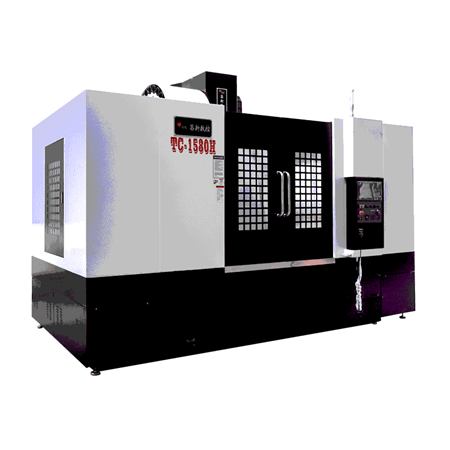
CNC—Computer Numerical Control—is the foundation of modern automated machining. This complete guide covers what CNC means, what CNC machines do, how CAD/CAM and G-code become physical movement, the major machine types, axis configurations, buying criteria, operation, maintenance, advantages and limitations, control systems, mold machining, repeatability, lubrication, chip handling, machine installation and cutting-tool selection.
What Is CNC?
CNC stands for Computer Numerical Control. The term describes a machine-control system in which programmed numerical instructions determine movement, position, speed and process functions. Instead of an operator manually guiding every motion, a controller interprets a program and commands motors, drives, spindles and auxiliary equipment.
CNC technology developed from earlier numerical-control systems and became a central part of industrial production as computers made programming, storage, editing and automation more practical. Today CNC is used in small workshops, mass-production factories, aerospace plants, furniture manufacturers, mold shops, electronics production, medical manufacturing and many other sectors.
A CNC machine is not simply “a machine with a computer attached.” The complete system includes mechanics, motion components, drives, a controller, feedback or position references, tooling, workholding and process software. The quality of the result depends on all of these elements working together.

Why CNC became so important
Manual machining can produce excellent parts, but complex paths, repeated batches and multi-step geometry become difficult to reproduce consistently by hand. CNC lets manufacturers store process logic digitally and execute it repeatedly. That makes complex shapes, controlled motion and production scaling more practical.
The main value is not that a CNC machine is automatically “perfect.” It is that programmed movement can be repeated under controlled conditions. Machine condition, tooling, setup, thermal behavior, workholding and process parameters still determine actual part quality.
What Do CNC Machines Do?
CNC machines transform programmed geometry into controlled physical processes. Depending on the machine, that process may be cutting, milling, drilling, turning, grinding, routing, laser cutting, plasma cutting, engraving, dispensing or another automated operation.
Milling
A rotating cutter removes material while the machine controls relative movement between the tool and workpiece.
Turning
The workpiece rotates while a cutting tool follows programmed paths to create cylindrical and rotational geometry.
Routing
High-speed spindles machine wood, plastics, composites and, on suitably rigid machines, non-ferrous metals.
Cutting processes
Laser and plasma CNC systems guide a process head over sheet material using programmed motion.
CNC can be used for one-off prototypes, custom parts, small batches or continuous production. The same technology can machine a single complex mold insert in one factory and produce thousands of repeated furniture components in another.
In an automotive production environment, different CNC systems may machine engine components, brake parts, fixtures and trim. In a sign workshop, a router may cut acrylic, aluminum composite panel and MDF. In a mold shop, a machining center may produce complex cavities and surfaces with multiple tools.
How Does a CNC Machine Work?
A CNC machine converts a digital manufacturing plan into coordinated movement. Although machine architectures differ, the workflow normally follows the same basic logic.
1. Design
The part is designed in CAD—Computer-Aided Design—or imported from an existing drawing or 3D model. The design defines the geometry to be manufactured, but it does not by itself tell a cutting tool how to remove material.
2. CAM programming
CAM—Computer-Aided Manufacturing—software is used to create toolpaths. The programmer chooses the tool, machining strategy, spindle speed, feed rate, depth of cut, step-over, entry method and other process parameters.
3. Post-processing
The CAM toolpath is translated by a post-processor into code appropriate for the target CNC controller. G-code is the most familiar format, but controllers may support additional commands, conversational programming or proprietary functions.
4. Machine setup
The operator secures the workpiece, installs the required tools, establishes work offsets, checks tool lengths and confirms that the program matches the physical setup. On production machines, probes and tool setters may automate parts of this process.
5. Program execution
The CNC controller reads the programmed commands and generates motion commands for the axes. Drives power stepper or servo motors; mechanical transmissions such as ball screws or rack-and-pinion systems convert motor rotation into machine movement.
6. Process verification
The completed part is inspected. If dimensions or finish are outside the required range, the root cause may be tooling, offsets, workholding, temperature, machine geometry, toolpath parameters or other process variables.
Main CNC system components
| Component | Role | Why it matters |
|---|---|---|
| Machine frame / bed | Structural foundation | Stiffness and vibration behavior influence accuracy and finish |
| Linear guides / bearings | Guide axis movement | Control geometry, friction and stiffness |
| Ball screw / rack drive | Convert rotary motor motion into linear motion | Affects backlash, speed and force transmission |
| Stepper / servo motor | Generate controlled axis motion | Determines torque, speed and response |
| Controller | Interpret program and coordinate axes | Defines supported motion, I/O and workflow |
| Spindle / process head | Perform cutting or process action | Power, torque, speed and tooling define process capability |
| Workholding | Keep the workpiece stable | A moving part destroys accuracy regardless of machine quality |
What Are the Main Types of CNC Machines?
CNC describes the control method, not one machine shape. Machines are classified by the process they perform, their kinematics, number of controlled axes and intended materials.
CNC lathe
On a CNC lathe, the workpiece rotates while controlled cutting tools remove material. Lathes are ideal for shafts, bushings, threads, tapers and other rotationally symmetric components. Modern turning centers may also include live tooling, sub-spindles and additional axes.
CNC milling machine / machining center
A CNC mill uses a rotating cutting tool while controlling movement between the tool and workpiece. Machining centers often include automatic tool changers, enclosures, coolant systems and rigid structures intended for metal cutting.
CNC drilling machine
Dedicated CNC drilling machines automate hole locations, patterns and drilling cycles. In practice, drilling is also a standard operation on routers and machining centers.
CNC laser cutting machine
A CNC laser system moves a focused laser beam along programmed paths. Different laser technologies are used for metals and non-metals. Cut quality depends on laser type, power, focus, assist gas, material and process settings.
CNC plasma cutting machine
Plasma systems use an electrically generated plasma arc to cut conductive metals. They are widely used for plate fabrication where high cutting speed and economical processing of thicker material are priorities.
CNC router
CNC routers generally offer larger working areas and high spindle speeds. They are widely used for MDF, plywood, solid wood, acrylic, engineering plastics, foam, composites and aluminum when the machine, tooling and process are suitable.
For router-specific machine selection, see the CNC Router Buying Guide and our international CNC router range.
Additive manufacturing / 3D printing
The Turkish source groups 3D printers with “3D CNC machines” because both convert digital instructions into controlled axis motion. Technically, 3D printing is normally classified as additive manufacturing, not CNC machining: material is added layer by layer rather than removed by a cutting tool. The control concepts overlap, but the manufacturing process is fundamentally different.
CNC grinding machine
CNC grinders use abrasive wheels to achieve controlled geometry, surface finish and dimensional accuracy. They are often used for hardened materials and finishing operations after other machining processes.
What Should You Consider Before Buying a CNC Machine?
A CNC purchase should begin with the parts and production process, not the machine catalog. A machine that looks impressive in specifications may still be a poor fit for the actual workload.
Define the production requirement
- Materials to be machined
- Maximum and typical part dimensions
- Required tolerance and surface quality
- Daily or weekly production volume
- Tool sizes and process types
- Need for manual or automatic tool changing
Evaluate machine capability
Working envelope, spindle power and axis speed matter, but they are only part of the specification. Structure, gantry stiffness, linear-guide size, transmission type, motor system, controller, workholding and chip/dust management should be considered together.
Software compatibility
Confirm how CAD/CAM files move into the machine workflow. Check supported post-processors, controller file formats, networking, probing, tool-offset functions and backup procedures.
Support, warranty and spare parts
A CNC machine is a long-term production asset. Ask who supports the controller, drives, spindle, bearings and mechanical components; whether standard industrial parts are used; how remote diagnosis is performed; and which spare parts should be stocked locally.
Training and usability
The best machine cannot produce reliably if operators do not understand setup, work offsets, tooling, alarms and safe recovery procedures. Training should be treated as part of the investment.
Total project cost
Compare more than purchase price. Freight, import costs, unloading, electrical preparation, extraction, compressed air, vacuum systems, tooling, CAM software, fixtures, commissioning and ramp-up time can materially change the total investment.
Start with material, part size, required result and production target. Then select the machine architecture that can deliver them reliably.
Why Spare Parts and Technical Support Matter
A CNC machine is not only a purchase; it becomes part of the production infrastructure. The ability to recover quickly from a failed drive, sensor, spindle component, power supply, control card or mechanical wear item can be more important than a small difference in initial purchase price.
Standard industrial components versus proprietary parts
Before buying, identify which machine components are standard industrial products and which are manufacturer-specific. Motors, drives, linear guides, bearings, contactors and power supplies may be globally available on some machines, while other systems use custom electronics or mechanical parts that only the original supplier can provide.
Neither approach is automatically wrong, but the owner should understand the consequence. A proprietary component can provide excellent integration, while a standardized component can make long-term sourcing easier.
What should be backed up?
- CNC controller parameters and machine configuration
- Servo or stepper-drive parameters
- Spindle inverter / VFD parameters
- PLC programs, macros and custom M-code logic where applicable
- Tool tables, work-offset strategy and calibration records
- Post-processors and CAM machine definitions
- Electrical drawings, I/O lists and component part numbers
Critical spare strategy
A production workshop should separate “cheap but critical” spares from expensive low-probability components. Limit switches, proximity sensors, relays, fuses, belts, collets, filters and common cables can stop a machine just as effectively as a major drive failure. Keeping a small planned stock can shorten downtime dramatically.
Remote diagnosis
Modern CNC support often starts remotely. Clear alarm text, photos of the electrical cabinet, controller screenshots, parameter backups and a description of what changed before the failure can help a technician identify the problem quickly. Good documentation turns troubleshooting from guesswork into a controlled process.
How Is a CNC Machine Maintained?
CNC machines combine mechanical motion, cutting systems, electronics and software. Preventive maintenance reduces unplanned downtime and helps preserve geometric performance.
Cleaning
Remove chips, dust and process residue according to the machine design. Contamination can damage seals, linear guides, ball screws, racks, sensors and cooling paths. Woodworking routers require particular attention to fine dust.
Lubrication
Linear guides, ball screws, racks, bearings and other moving components must receive the lubricant specified by the manufacturer. Lubrication interval and quantity matter: insufficient lubrication accelerates wear, while incorrect or excessive lubricant can create other problems.
Tool and tool-holder inspection
Check cutters, collets, holders and spindle tapers. Tool wear changes cutting forces and dimensions. Contamination or damage in the holder can increase runout and vibration.
Software and parameter backups
Back up CNC parameters, drive parameters, inverter settings, PLC data, macros and machine-specific configuration before maintenance or software changes. An undocumented parameter loss can turn a simple component replacement into extended downtime.
Periodic service
Inspect belts, couplings, gearboxes, bearing preload, rack engagement, ballscrew support bearings, cable chains, filters, fans, coolant or spindle-cooling circuits and safety devices according to operating hours and environment.
Operator training
Operators are often the first people to notice new vibration, unusual sound, axis drag, tool marks or alarm patterns. A simple inspection and maintenance log helps detect gradual change.
For a structured checklist, see our CNC Router Maintenance Checklist.
How Are CNC Machines Used?
The exact workflow depends on machine type, but most CNC production follows a disciplined sequence.
- Create or import the design. Build the part geometry in CAD or load an approved model/drawing.
- Create the manufacturing strategy. Use CAM or controller programming to define tools, operations and paths.
- Prepare the machine. Install tools, workholding and material; establish work coordinates.
- Verify the program. Simulate where possible, check clearances, confirm units and offsets, and use safe proving procedures.
- Run the process. Monitor the first part and verify chip formation, cutting sound, spindle load and workholding.
- Measure the result. Compare the finished part against the required drawing or quality standard.
CNC machines contain high-energy motion, rotating tools, electrical power and sometimes compressed air, vacuum, coolant or lasers/plasma. Guards, interlocks, emergency stops, training and machine-specific procedures remain essential.
What Are the Advantages of CNC Machines?
Precision and repeatability
Programmed motion allows the same toolpath to be executed repeatedly. When the machine, tooling and setup remain stable, this supports consistent production and statistical process control.
Complex geometry
CNC makes it practical to generate curves, pockets, contours, hole patterns and three-dimensional toolpaths that would be slow or difficult to reproduce manually.
Productivity
Automated toolpaths can reduce manual positioning and allow a machine to continue a sequence of operations with limited intervention. Automatic tool changers, pallet systems and probing can extend this further.
Digital repeatability
Approved programs, tool lists and setup documentation can be stored and reused, making repeat jobs more controlled than rebuilding a manual process from memory.
Material utilization
CAM nesting and optimized toolpaths can reduce scrap in sheet processing. The benefit depends on geometry, material and the quality of the nesting strategy.
Operator separation from the cutting zone
Enclosed or properly guarded CNC systems can reduce direct operator contact with the cutting process. This does not make the process inherently risk-free, but it supports safer machine design.
What Are the Limitations and Disadvantages of CNC Machines?
Initial investment
Machine, tooling, software, extraction, workholding, metrology and training can create a substantial upfront cost.
Programming and process knowledge
Complex parts require competent CAM programming, tooling knowledge and setup discipline. Buying an advanced machine without the required process capability can leave much of its potential unused.
Machine-specific material and process limits
No CNC machine is suitable for every material. A light router and a rigid machining center may both be CNC, but their cutting-force capacity, spindle characteristics and thermal behavior are very different.
Maintenance requirement
Automation adds drives, sensors, controllers and mechanical systems that require maintenance. Poor maintenance can produce subtle quality problems before a complete failure occurs.
Energy and infrastructure
Large spindles, vacuum pumps, dust collectors, compressors, coolant systems and servo systems can create significant electrical demand. The complete production cell should be considered.
Workforce changes
CNC can reduce some manual operations while increasing demand for programmers, setup technicians, maintenance specialists and process engineers. The main effect is a change in skills, not simply “no operators required.”
How CNC Machines Enable More Precise Production
One of the reasons CNC transformed manufacturing is that machine motion can be defined numerically instead of relying only on an operator’s hand position and visual judgment. Once a process is proven, the same coordinates, offsets, feed moves and toolpaths can be repeated from part to part.
This digital control is especially valuable when a component contains many features that must stay geometrically related. Hole patterns, pockets, profiles, contours and reference surfaces can all be created within one coordinate system. When fewer manual repositioning steps are required, there are fewer opportunities to introduce setup variation.
Precision still depends on the mechanics
The controller may command a position to several decimal places, but the physical machine must be able to reach and hold that position under load. Linear-guide stiffness, screw or rack quality, bearing condition, servo tuning, frame deflection and spindle runout all influence the difference between commanded movement and real movement.
Cutting forces change the result
A machine can position accurately with no cutting load and still produce dimensional error during machining if the tool, workpiece, spindle or frame deflects. Heavier cuts create higher forces. Long tools bend more than short tools. Thin workpieces can vibrate or lift. Good process engineering therefore combines machine accuracy with realistic cutting parameters.
Thermal effects matter
Spindles, motors, ball screws and the workshop environment all change temperature during operation. Materials expand as temperature rises. High-precision production may require machine warm-up, controlled room temperature, thermal compensation or measurement strategies that account for these changes.
Measurement closes the loop
Precision manufacturing is not complete when the program finishes. Parts must be measured using suitable instruments. Calipers may be enough for general fabrication, while micrometers, height gauges, bore gauges, probes or coordinate-measuring systems may be required for tighter tolerances. Measurement data shows whether the process is actually capable, rather than merely programmed to the correct nominal dimension.
How Does CNC Improve Precision and Repeatability?
CNC systems control position numerically, but the controller is only one part of dimensional performance. Machine geometry, backlash, servo tuning, spindle runout, thermal expansion, cutting forces, tool deflection and workholding all influence the actual part.
Accuracy versus repeatability
Accuracy describes how close a commanded position or finished feature is to its intended value. Repeatability describes how consistently the machine can return to or reproduce a result under the same conditions.
The Turkish source describes CNC as being able to make the same part with “zero error.” A more technically correct statement is that a CNC machine can reproduce motion within a specified tolerance or variation. No physical machine has literally zero error.
Some CNC machines specify positioning or repeatability in micrometers, but the finished-part tolerance is not automatically equal to the machine’s axis specification. Process capability must be proven for the actual part, material, tooling and environment.
CNC Machines and CAD/CAM
CAD and CAM connect design engineering with manufacturing. CAD defines the part; CAM defines how a machine will produce it.
CAD: Computer-Aided Design
CAD software creates 2D drawings and 3D models. Engineers use it to define dimensions, geometry, assemblies and design intent before manufacturing begins.
CAM: Computer-Aided Manufacturing
CAM software takes the geometry and creates machining operations. The programmer selects tools and process parameters, generates toolpaths and simulates motion. A post-processor then generates controller-compatible code.
Typical CAD/CAM-to-CNC workflow
CAD/CAM integration is especially valuable for complex parts, nested sheet work, molds and recurring production because the digital manufacturing definition can be edited and reused.
What Does Simultaneous Mean in CNC Machining?
Simultaneous CNC control means that multiple machine axes move in a coordinated way at the same time. Three-axis contouring already coordinates X, Y and Z movement; the term becomes especially important when rotary axes are added.
On a simultaneous five-axis machine, three linear axes and two rotary axes can move together while the tool follows a complex surface. This can reduce setups, improve access to difficult geometry and maintain a more favorable tool orientation.
Benefits
- Complex curved surfaces can be machined continuously.
- Multiple faces may be reached in one setup.
- Shorter effective tool lengths can sometimes be used by tilting the tool or part.
- Setup-related alignment errors can be reduced.
Trade-offs
Simultaneous multi-axis machining requires a suitable machine, controller, CAM system, post-processor, collision checking and skilled programming. The machine and software investment is also higher.
How Are CNC Machines Classified by Axis Count?
An axis is a controlled degree of movement. Axis naming and machine kinematics vary, but common classifications provide a useful overview.
| Axis class | Typical movement | Common use |
|---|---|---|
| 2-axis | Two controlled axes | Simple profiles, many turning operations and special-purpose machines |
| 3-axis | X, Y and Z linear movement | Routing, milling, engraving, drilling and 3D surface machining from one orientation |
| 4-axis | Three linear axes plus a rotary axis, or another fourth controlled axis | Rotary work, indexing and multi-side access |
| 5-axis | Three linear plus two rotary degrees of freedom | Complex surfaces and multi-face machining |
| 6+ axes | Machine-specific combinations | Mill-turn, robotics, special machining and complex automation |
Axis count alone does not determine machine quality. A rigid, well-designed three-axis machine can be a better production choice than a lightly built five-axis system if the parts do not require extra kinematics.
What Is a Mold-Making CNC Machine?
“Mold-making CNC” usually refers to a machining center configured for mold and die work. Mold components can require complex 3D surfaces, small tools, fine finishing passes, deep cavities and tight geometric relationships.
These machines commonly emphasize structural rigidity, spindle quality, thermal stability, high-resolution motion, tool management and CAM support for complex surface machining.
Typical mold applications
- Plastic injection molds
- Die-casting molds
- Forming dies
- Electrodes and inserts
- Complex cavity and core geometry
General production CNC vs mold-making CNC
A general manufacturing CNC may be optimized for a broad range of parts, cycle time and flexible tooling. A mold-focused machine may prioritize high surface quality, fine contouring, thermal control and the ability to use small tools over long finishing programs.
The distinction is not absolute: many high-quality machining centers can perform both jobs when configured correctly.
What Is a CNC Control Unit?
The CNC controller is the hardware and software system that interprets the machine program, performs motion planning and coordinates drives, spindle commands, I/O and auxiliary functions.
Modern controllers may also manage PLC logic, tool tables, work offsets, probing cycles, networking, macros, alarms, diagnostics and safety-related interfaces.
How to choose a CNC controller
- Match the required axes and kinematics. A simple three-axis router and a five-axis machining center require very different control capability.
- Check motion performance. Look at interpolation, look-ahead, pulse or bus interfaces, servo cycle capability and supported drive architecture.
- Evaluate usability. Operators need clear offsets, tool tables, program management and alarm information.
- Confirm CAM/post compatibility. A reliable post-processor is essential for advanced machines.
- Check support and documentation. Parameter backup, manuals, spare hardware and remote service matter throughout machine life.
- Consider cost in context. The cheapest controller may become expensive if it limits production or makes support difficult.
Which Industries Use CNC Machines Most?
CNC is used wherever repeatable controlled manufacturing is valuable. Different industries use different machine classes and quality systems.
Automotive
Engine components, transmission parts, fixtures, prototypes, molds, trim components and production tooling are common CNC applications.
Aerospace
Aerospace manufacturing uses CNC for structural components, engine parts, tooling and complex high-value geometry. Material traceability, process validation and strict quality control are central to this sector.
Medical
CNC is used for surgical tools, orthopedic components, dental parts, fixtures and medical-device components. Manufacturing requirements depend on the regulated product and material.
Metalworking
General machine shops use CNC turning, milling, drilling and grinding for custom parts, production components and maintenance spares.
Electronics
CNC can machine enclosures, heat sinks, fixtures, panels, plastics and precision mechanical parts used in electronic systems. PCB production may also use CNC drilling or routing.
Mold and die
Complex cavities, inserts, electrodes and forming tools are produced with CNC machining and often combined with EDM, grinding and polishing.
Furniture, signage and panel processing
CNC routers are widely used for cabinetry, furniture panels, doors, signs, acrylic, composite materials and nested-sheet production.
What Is an Automatic CNC Lubrication System?
CNC linear guides, ball screws and other sliding or rolling interfaces require controlled lubrication. An automatic lubrication system meters lubricant to designated points at defined intervals so the operator does not have to lubricate every point manually.
Centralized lubrication systems
A pump feeds multiple lubrication points through distribution lines and metering units. This architecture is common on larger machines because many guide blocks and screw supports can be supplied from one reservoir.
Integrated / compact lubrication systems
Smaller machines may use compact pumps integrated into the machine structure. The operating principle is similar: distribute the correct lubricant to the required locations at an appropriate interval.
Why automatic lubrication matters
- Reduces risk of missed manual lubrication.
- Supports consistent friction conditions.
- Helps protect guides and screws from premature wear.
- Makes maintenance intervals easier to standardize.
Automatic systems still need maintenance. Reservoir level, lubricant type, clogged lines and metering-unit operation must be checked.
What Is a CNC Chip Conveyor?
A chip conveyor removes chips and swarf generated during machining from the machine enclosure or cutting area. Different conveyor types are selected for different chip shapes, materials and coolant systems.
Main functions
- Prevent excessive chip accumulation around the process.
- Move chips to a collection container or processing system.
- Reduce manual cleaning inside the machine.
- Help prevent chips from interfering with covers, sensors and moving components.
- Support coolant separation or recycling where the conveyor is designed for it.
Common designs include hinge-belt, scraper and magnetic conveyors. The correct type depends on whether chips are long, stringy, short, fine or ferromagnetic.
Why Are CNC Machines Anchored, Leveled and Aligned?
A CNC machine must sit on a suitable foundation and be installed according to the manufacturer’s requirements. Leveling and anchoring are not cosmetic steps: they can affect machine geometry, vibration and long-term stability.
Accuracy
Machine structures can twist if they are supported unevenly. Precision leveling or geometric setup helps keep guideways and structural references within the intended alignment.
Stability
Rapid axis acceleration and cutting forces create dynamic loads. Proper installation prevents unwanted machine movement and reduces vibration transmission.
Machine life
Incorrect support can load the frame unevenly and influence bearing, guide or alignment behavior over time.
Safety
Large CNC equipment has significant mass and moving energy. Foundation, anchoring and access around the machine should follow the manufacturer’s installation plan.
What Is a CNC Indexer or Dividing Head?
An indexer rotates the workpiece to controlled angular positions. On CNC machines it can be used as a positioning axis or, depending on the system, as a continuously controlled rotary axis.
Indexing lets multiple faces of a part be machined without manually unclamping and repositioning it. A four-sided component, for example, can be rotated through programmed angles while maintaining a common setup reference.
Rotary devices are used for engraving cylinders, machining multiple faces, drilling bolt patterns, producing gears and accessing complex geometry.
Why Are Cast-Iron Bodies Used in CNC Machines?
Many machine tools use cast-iron beds, columns and structures because cast iron offers a useful combination of stiffness, damping, dimensional stability and manufacturability.
Stiffness and strength
A properly designed cast structure can resist cutting loads and support heavy axes and workpieces.
Vibration damping
Cast iron generally provides better inherent vibration damping than many welded steel structures. Damping helps reduce chatter and can improve surface finish.
Thermal behavior
Machine accuracy changes with temperature. Cast structures provide substantial thermal mass, though thermal stability still depends on machine layout, heat sources, warm-up and environmental control.
Complex structural shapes
Casting allows ribs, cavities, bearing housings and complex sections to be integrated into the machine structure. That gives designers freedom to place material where stiffness is required.
Welded steel frames are also widely used, especially for large CNC routers. Neither construction method is automatically superior: geometry, stress relief, section design, machining and final assembly determine structural performance.
How Do You Select a Cutting Tool for a CNC Machine?
Cutting-tool selection depends on the workpiece material, process, machine, spindle, workholding and desired result. A tool cannot be selected correctly from diameter alone.
Workpiece material
Steel, stainless steel, aluminum, brass, wood, composites and plastics require different tool materials, coatings, flute geometry and edge preparation.
Cutting speed and spindle speed
Cutting speed is the surface speed between the cutting edge and workpiece; it is not the same thing as RPM. Tool diameter and recommended surface speed are used to calculate a suitable spindle speed.
Use the tool manufacturer’s data and machine limits. The formula is a starting relationship, not a complete machining recipe.
Feed and chip load
Feed rate must be related to spindle speed, flute count and target chip load. Excessively low feed at high RPM can make a tool rub instead of cut; excessive chip load can overload the tool, spindle or machine.
Machining operation
Drilling, roughing, finishing, pocketing, slotting, surfacing, engraving and profiling place different demands on the tool. Geometry should match the operation.
Tool life
Tool wear is affected by heat, material abrasiveness, runout, cutting parameters, rigidity, chip evacuation and coolant or lubrication strategy. A more expensive tool can be cheaper per part if it produces longer stable life and fewer rejected parts.
Machine capability
Confirm spindle speed range, power and torque, collet or holder size, tool length, axis rigidity and available feed rate. A toolpath should not demand more cutting force than the machine can control.
Frequently Asked Questions About CNC
What does CNC stand for?
CNC stands for Computer Numerical Control: programmable numerical control of machine motion and process functions.
What is the difference between CNC and a conventional machine?
A conventional machine relies more heavily on direct manual control. A CNC machine executes programmed movements automatically while the operator manages setup, tooling, verification and supervision.
Is a CNC router the same as a CNC milling machine?
No. Both use CNC-controlled cutting, but routers usually emphasize large working areas and high spindle speed, while machining centers are generally designed for higher rigidity and heavier metal cutting.
What is G-code?
G-code is a common machine-programming language used to command movements, coordinates, speeds and machining functions. Actual supported commands depend on the controller.
Do all CNC machines use CAD/CAM?
Not necessarily. Simple programs can be written at the controller or generated conversationally, but CAD/CAM is widely used for complex geometry and efficient toolpath creation.
What is CNC repeatability?
Repeatability is the ability of a machine to reproduce a position or result within a stated variation under defined conditions. It is not “zero error.”
How many axes does a CNC router need?
Most standard routers are three-axis machines. A fourth rotary axis can be useful for cylindrical work, while five-axis systems are used when complex tool orientation and multi-face access are required.
How should I choose a CNC machine?
Define material, workpiece size, required tolerance, production volume and process first. Then compare machine structure, spindle, motion system, controller, workholding, support and total installation cost.
Does a CNC machine need regular maintenance?
Yes. Cleaning, lubrication, tooling inspection, filters, cooling systems, axis components, electrical cabinets and parameter backups all require planned maintenance.
What industries use CNC?
Automotive, aerospace, medical, metalworking, electronics, furniture, signage, plastics, mold-making and many other manufacturing sectors use CNC systems.
English full-scope edition based on the CNC Marketi Turkish knowledge article “CNC Nedir? CNC Makineler Ne İşe Yarar? CNC Çeşitleri Nelerdir? CNC Nasıl Çalışır?”. The English edition preserves the complete source topic map while correcting ambiguous technical wording where necessary.